
Short answer: the Houthis now hold the high ground over it, but nobody has closed it. Yemen's Saudi-backed government forces said Sunday they are pulling out of Dhubab airport and the Bab el-Mandeb area and redeploying toward Aden, which Reuters says leaves the Iran-aligned Houthis in control of the area overlooking the strait (NBC News/Reuters, The National). No attack on shipping has been reported. But with Iran already squeezing the Strait of Hormuz, the second gate for Gulf oil now sits next to the Houthis, a few hours before oil futures reopen at 3 PM PT.
Six weeks ago this was supposed to be the comeback. On Oct. 5, Saudi-backed Yemeni forces launched Operation Fajr Yemen (Dawn of Yemen) and pushed back into Dhubab, the airport and coastline near the narrowest stretch of the Red Sea (Asharq Al-Awsat). On Sunday they gave it back. A short statement said the troops were leaving "based on the priority of securing the capital, Aden."
Traders spent the weekend watching the Persian Gulf, where Iran fired drones at Bahrain for the second time in three days. The bigger shipping story may have just happened on the other side of Arabia.
What happened in Yemen on Sunday
"The Southern Armed Forces announce the implementation of a redeployment operation for its forces from Dhubab Airport and the Bab el Mandeb area, west of Taiz Governorate," the main government-aligned force in the south said in a statement. "This step is taken based on the priority of securing the capital, Aden, and the neighbouring governorates, as well as strengthening the front lines and addressing existing threats" (NBC News/Reuters).
Irish broadcaster RTE called it a major setback for the Saudi-backed campaign and the apparent end of the six-week counteroffensive to reclaim the coast near the mouth of the Red Sea, which the Houthis seized in a lightning advance in September (RTE). Yemeni military sources told RTE the government troops pulled back to al-Suqyah, just south of Dhubab and about 150 km (95 miles) west of Aden, and are still trying to push the Houthis off nearby coastal areas. In the highlands south of the besieged city of Taiz, the Houthis sit about 80 km (50 miles) from Aden. There was no immediate response from the Houthis or from Saudi Arabia.
The government is pushing back on the word "withdrawal." A media adviser to Yemen's presidency told Asharq Al-Awsat it was "a calculated military move" to protect Aden, reinforce the Lahj front and set up a push to break the siege of Taiz, and said the troops are now about 6 to 8 km from Bab el-Mandeb, still inside the operational area. He said the mountains overlooking the coast were where the real danger lay, and that in his assessment the Kahbub mountains are still held by government-aligned forces (Asharq Al-Awsat). That is the government's read. The plain fact both sides agree on: the troops left the strait's edge.

Who controls the Bab el-Mandeb Strait now?
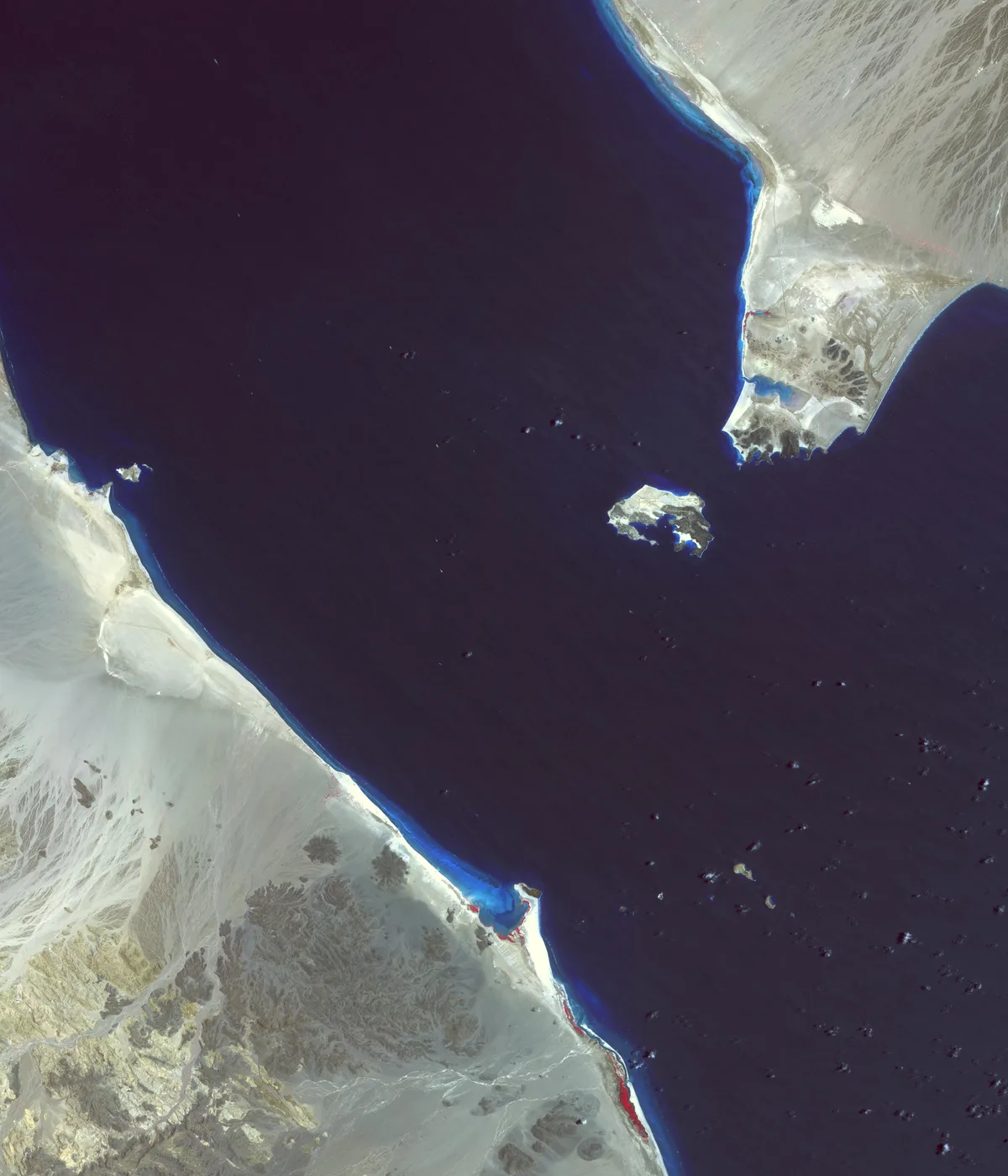
Think of it in two layers. The water is an international shipping lane, and nobody has announced a closure. The land around it is what changed. The Houthis already ran most of Yemen's Red Sea coast after their September push, which captured three strategic islands and the port of Mokha (CNA). Dhubab was the government's foothold right at the narrows. With it gone, Reuters says the Houthis are in control of the area overlooking the strait (NBC News/Reuters), and The National reports the pullback hands them greater leverage over the waterway (The National).
Leverage is the right word. Holding the coast means drones, missiles and small boats can reach the lane with very little warning. It does not mean ships stop. Lloyd's List Intelligence said in its Nov. 12 brief that there had been no attacks on shipping in the Red Sea since Aug. 24, although an unexplained large explosion was seen in the strait on Nov. 6 (Lloyd's List Intelligence).
Why this matters for oil: the dual squeeze
Shipping through the Strait of Hormuz has been restricted since the war began in February, and the US has a naval blockade on Iran's ports (BBC). Saudi Arabia's workaround is the East-West pipeline, which carries crude across the kingdom to Yanbu on the Red Sea. From Yanbu, tankers either go north through the Suez Canal or south through Bab el-Mandeb toward Asia (CNA). Reuters put it bluntly on Sunday: with Iran disrupting Hormuz and the Houthis gaining leverage at Bab el-Mandeb, this "dual squeeze" would further isolate Gulf oil producers from their main shipping routes (NBC News/Reuters).
The Houthis have also been hitting the workaround itself. They have struck Saudi ports, airports and Aramco facilities, including the Yanbu export hub (NBC News/Reuters), and on Thursday they said they hit a pumping station on the East-West pipeline, a Yanbu oil facility and an Aramco building in Riyadh (CNBC). Those are Houthi claims; the damage has not been independently confirmed.
Here is the part the market may be underpricing. Lloyd's says October traffic through Bab el-Mandeb hit 1,363 transits, up 43% from a year earlier but still 46% below pre-crisis levels, and the recovery is being driven by container ships, not crude tankers. The big tanker surge was northbound through Suez, fed by a rebound in Yanbu loadings (Lloyd's List Intelligence). So the oil most exposed today is Saudi crude that needs the southern exit to reach Asia, plus the container lines that only just started coming back.
Meanwhile in the Gulf: Bahrain, again
Sunday's Yemen news landed on top of a second Iranian drone attack on Bahrain in three days. Bahrain's military said its air defenses intercepted and destroyed the attack "before they could achieve their objectives" (BBC). Bahrain's Foreign Ministry called it "a resumption of Iran's aggression" and said it "holds Iran fully responsible for the attacks and their consequences" (Al Jazeera).
Iran's Revolutionary Guard said it sent six drones at a US air defense radar at al-Riffa air base and that "the Strait of Hormuz is closed" (BBC). Treat that as an Iranian claim. After Friday's similar claim, the US military said both drones were shot down with no injuries or damage. Iranian military claims of tankers hit by explosions in Hormuz have not been verified either (CNBC/Reuters). Our running Iran and oil explainer has every update since Friday.
What the market looked like at Friday's close
Oil walked into the weekend calm. Brent and WTI both fell about 2.5% last week, their second straight weekly drop, and the trade had flipped from fear of shortage to fear of surplus. "Now it looks like the biggest fear is a surplus," Phil Flynn of the Price Futures Group told CNBC (CNBC). That is the setup a Red Sea shock would hit.
| Market | Ticker | Friday close | Friday move |
|---|---|---|---|
| WTI crude futures | CL1! | $88.56 | -0.2% |
| Brent crude futures | BRN1! | $95.84 | flat |
| US Oil Fund | USO | $145.58 | -0.3% |
| Energy sector ETF | XLE | $64.96 | +1.0% |
| Exxon Mobil | XOM | $170.59 | +0.5% |
| Frontline (crude tankers) | FRO | $46.97 | +0.4% |
| International Seaways (tankers) | INSW | $105.23 | +0.6% |
| Scorpio Tankers (product tankers) | STNG | $83.03 | -0.5% |
| ZIM (container shipping) | ZIM | $29.34 | +0.3% |
| Lockheed Martin | LMT | $596.04 | -1.3% |
| RTX | RTX | $198.58 | +0.1% |
| Northrop Grumman | NOC | $550.43 | +0.2% |
Source: TradingView, Friday, Nov 13, 2026 closes (futures are settlement-session closes). These are Friday closes, not live prices. Nothing has traded on the Yemen news yet.
What a Houthi grip on Bab el-Mandeb could mean
- Oil ($WTI, Brent): a risk premium is likely to show up in Brent first, since Brent is the global benchmark for seaborne crude. If the Houthis do nothing at sea, the market that was worried about a surplus on Friday may fade any pop by Monday afternoon.
- Tanker rates: a longer, riskier route is usually good for tanker owners. Ships that skip the Red Sea and sail around Africa tie up capacity for weeks, and war-risk insurance climbs. Names like FRO, INSW and STNG tend to trade on that.
- Container shipping and Suez: container lines only just returned to the Red Sea. If they reroute again, freight costs rise and Suez traffic falls. That cuts both ways for a carrier like ZIM: higher rates, longer voyages.
- Defense stocks: more escort and air-defense demand in two chokepoints at once is a talking point for LMT, RTX and NOC, though they mostly trade on budgets, not weekends.
- Saudi exports: if Yanbu tankers cannot go south, more Saudi crude has to go north through Suez or wait. That is the real supply question to watch this week.
Sunday night and Monday: if/then
- If oil futures open higher at 3 PM PT and hold, the market is pricing the dual squeeze. Brent back near $100 would put energy and tanker names in charge Monday.
- If futures pop and fade, the surplus story is still winning, and the read is that Houthi control of the shore does not equal a closed strait.
- If the Houthis announce new shipping rules or hit a vessel in the strait, this stops being a map story and becomes a supply story. Expect a fast gap up in Brent and tanker rates.
- If Saudi-backed forces retake the heights around the strait, the risk premium likely comes back out.
- If Iran confirms or the US confirms damage in Bahrain, that is a separate escalation on top of this one. See our Iran explainer.
FAQ
Who controls the Bab el-Mandeb Strait now?
The waterway is an open international shipping lane and no closure has been announced. On land, Reuters reports that Yemen's Saudi-backed government forces withdrew from Dhubab airport and the area overlooking the strait on Nov. 15, 2026, leaving the Iran-aligned Houthis in control of that area. Yemen's presidency calls it a redeployment, not a withdrawal.
Why did Yemen's government forces pull back from Bab el-Mandeb?
The Southern Armed Forces said the priority is securing Aden and nearby provinces and strengthening other front lines as the Houthis push south. Houthi forces are about 80 km (50 miles) from Aden in the highlands south of Taiz, according to Yemeni military sources quoted by RTE.
Is the Bab el-Mandeb Strait closed to shipping?
No. As of Sunday morning PT there was no reported attack on ships or announced closure. Lloyd's List Intelligence reported no attacks on Red Sea shipping since Aug. 24 as of Nov. 12. The risk is that Houthi control of the shore makes attacks easier.
Why does Bab el-Mandeb matter for oil prices?
It is the southern gate of the Red Sea and the route to the Suez Canal. With Hormuz restricted since February, Saudi Arabia has leaned on its East-West pipeline to Yanbu on the Red Sea. Tankers from Yanbu that head to Asia must pass Bab el-Mandeb, so trouble there squeezes the main Hormuz workaround.
What were oil prices before the news?
Brent settled at $95.84 and WTI at $88.56 on Friday, Nov. 13, 2026, after a second straight weekly decline of about 2.5%. US oil futures reopen Sunday at 3 PM PT.
Is this connected to the Iran war?
Yes. The Houthis are aligned with Iran, and Reuters describes the fighting in Yemen as another front in the wider US-Israeli war on Iran. The same weekend, Iran fired drones at Bahrain twice, and Bahrain says it intercepted them.
Not financial advice. Prices are Friday, Nov 13, 2026 closes from TradingView, not live quotes. The situation in Yemen is moving quickly, claims from the Houthis and Iran are labeled as claims, and nothing here guarantees any market outcome.
Follow @CosAnalyst on X, like the CosAnalyst Facebook Page for plain-English market notes, and join our Telegram at @CosAnalystSignals.
Your call: Is a Houthi-held Bab el-Mandeb the shock that sends Brent back to $100, or is the oil market right to shrug until a ship actually gets hit? Pick a side in the comments.