
The hangover is the story everyone already owns. Thin Friday. A long weekend. Tuesday the desks come back and someone fades the open because September is supposed to be heavy. That is not a number. That is a mood.
I do not take “Labor Day week is weak” as a ticket. The long-run week is barely a leak — a coin-flip week with a small average dent. What changed is the Tuesday. In the recent book, the first session after the holiday has not been a fair coin. It has leaned down. The Dow has been heavier than the S&P on that same day. A streak, not a law.
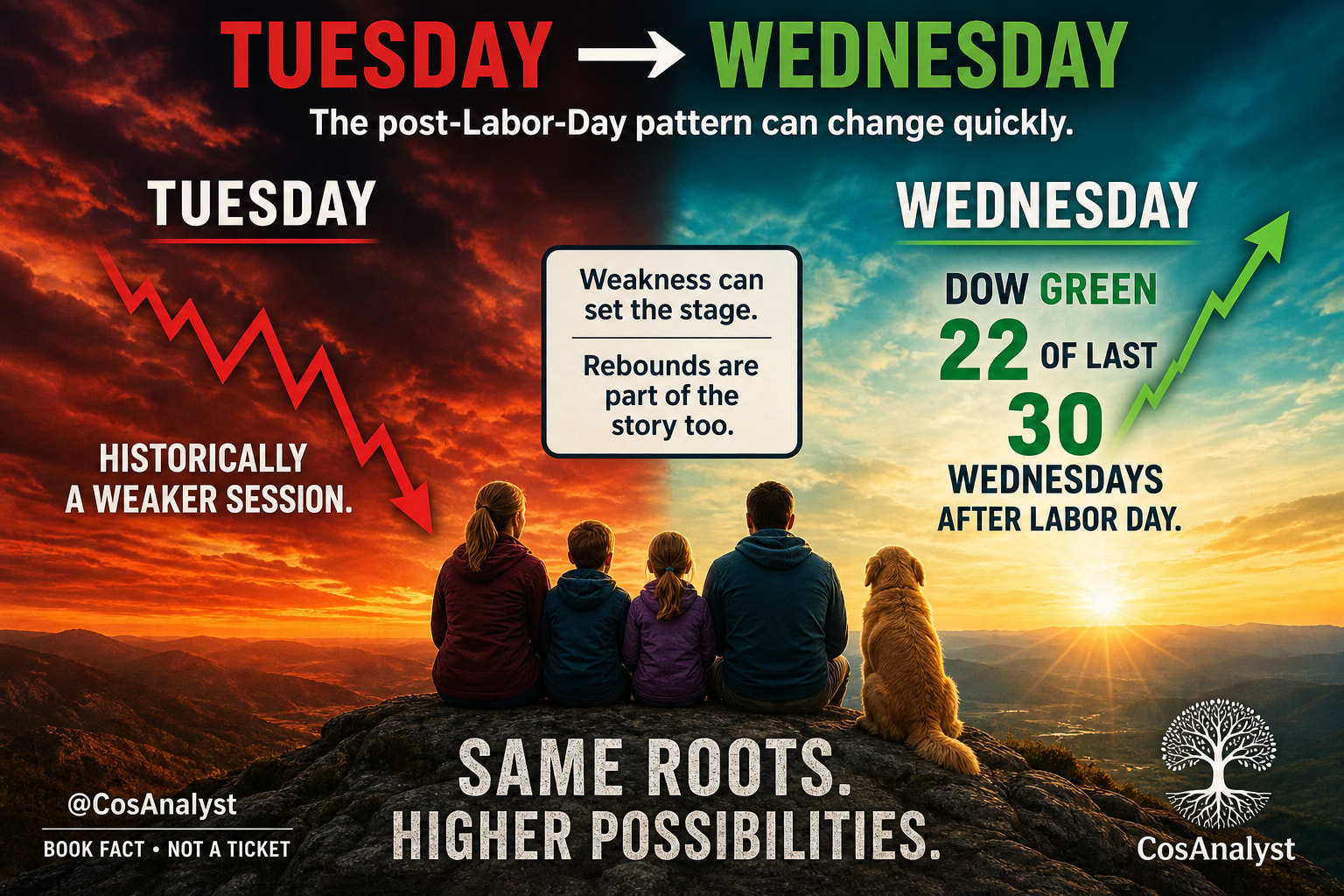
Then the sequence most calendars skip: if Tuesday has been the leak, Wednesday has often been the bounce. That is a two-day map. It is not a system.
And 2026 is not sitting in the average bin. The S&P 500 walks into this weekend already up more than 12% year-to-date. When that has been true, Labor Day week has historically looked better than the all-years average. Tuesday, September 8, is the next test. Then we stop.
Tuesday’s recent bearish streak
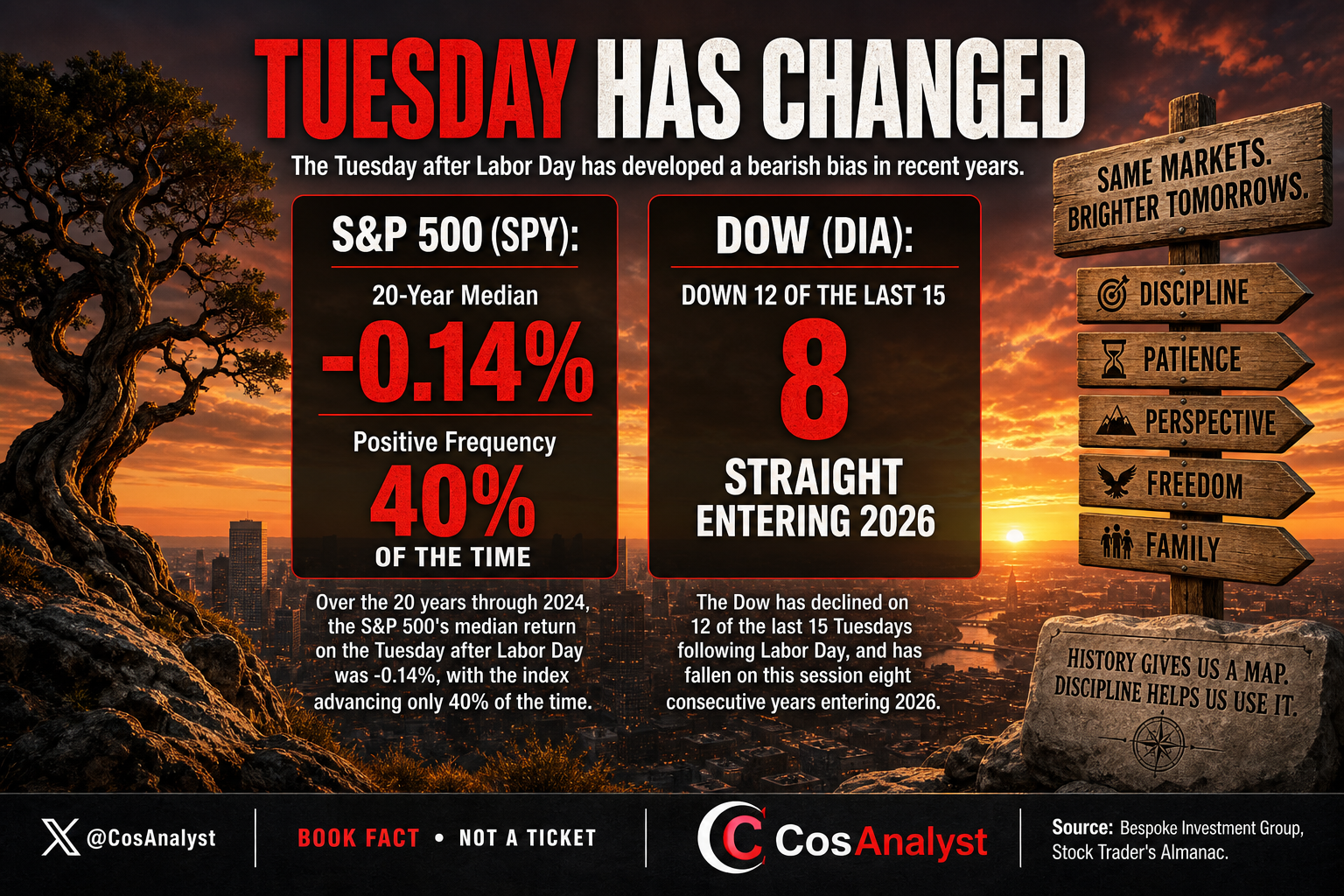
The Tuesday after Labor Day used to be just another reopen. It isn’t — not in the recent book. Bespoke and the Stock Trader’s Almanac have the same lean. I will not restack the card in a table. The print is above. A 20-year median that small is not a crash. It is a bias. Bias is what you notice so you do not confuse a seasonal leak with a thesis.
The Dow has been the heavier side of that same Tuesday. Down on twelve of the last fifteen Labor Day Tuesdays, and on an eight-year losing streak entering 2026. Persistence is not prophecy. Streaks end. They also tell you the reopen has not been a gift.
That creates an intriguing two-day historical sequence: Tuesday: weakness. Wednesday: potential rebound. That’s not a trading system. But it is a useful map.
Then comes the 2026 wrinkle
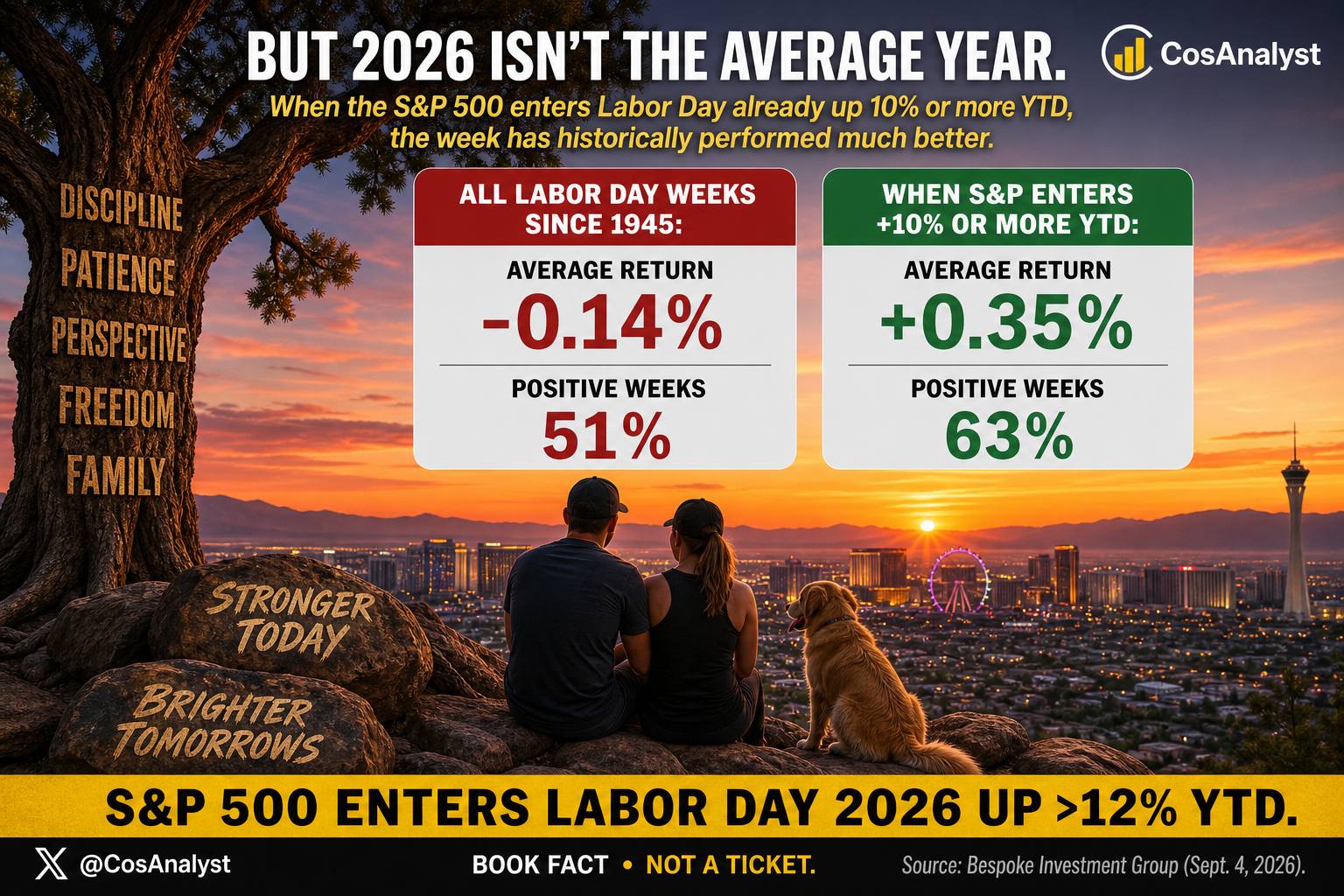
Here is the disagreement with the hangover crowd. 2026 is not walking in cold. The S&P 500 enters Labor Day already up more than 12% year-to-date. That is the sixth double-digit Labor Day approach in the last ten years. Bespoke, September 4: 10%+ year-to-date into this weekend is not rare — about 40% of years since 1945 — but the current run of strength is.
The conditional study is the number most hangover posts will not print. All Labor Day weeks since 1945 are one book. Years the S&P was already up 10% or more year-to-date are another. The second book has historically been the better week. That does not retire Tuesday. It changes the bin you put the week in.
Seasonality is context — not a trade signal
A calendar is not a fill. A 20-year median is not an order. If Tuesday is heavy, the historical Wednesday rebound is the next page of the same map — not an automatic fade and not an automatic buy-the-dip. If Tuesday is not heavy, the recent streak just told you something ended. Either way, the week is still sitting in a year that is already up double digits. Do not flatten those two facts into one slogan.
This is simulated research. Not advice. Book fact. Not a ticket.
What we’re watching Tuesday
Tuesday, September 8. The cash session after the holiday. Not a speech. Not an invented odds screen. The reopen.
If the hangover prints, we will say it printed. If it does not, we will not invent a seasonal alibi. Wednesday is only interesting after Tuesday has spoken.
The Map
- Tuesday after Labor Day: the recent book has leaned weak. Context, not a short ticket.
- Wednesday after Labor Day: the rebound side of the same two-day sequence. Context, not a long ticket.
- Labor Day week when the S&P is already up 10%+ year-to-date: historically a better week than the all-years average. 2026 is in that bin.
- Skip is valid. A map you will not take is still a map.
Bottom Line
The hangover is real enough to notice and too small to worship. Tuesday has been the weaker session. Wednesday has often been the bounce. 2026 is not the average year — the S&P is already up more than 12% heading into the weekend. Seasonality is context. Not a ticket.
Tuesday’s recent lean is a map. The 2026 wrinkle is a different bin. Neither is a ticket. BOOK FACT · NOT A TICKET.
Sources
- Bespoke Investment Group, Morning Lineup, Sept. 4, 2026: S&P 500 enters Labor Day 2026 up over 12% year-to-date; Labor Day weeks since 1945 average −0.14% and are positive 51% of the time; when the S&P enters +10% or more year-to-date, the week has averaged +0.35% and been positive 63% of the time. Bespoke, Sept. 4, 2026.
- Bespoke Investment Group and Stock Trader’s Almanac: Tuesday after Labor Day, 20-year S&P median −0.14% through 2024, positive 40% of the time; Dow down 12 of the last 15 such Tuesdays, eight consecutive years entering 2026.
- Simulated research. Publisher + AI-assisted. Not advice. BOOK FACT · NOT A TICKET.